Footville's first 50 years were spent in establishing the community and businesses. Their connection to the 'outer' world was mainly through the railroad. They shipped and received necessary goods, mail came by rail and the depot was the 'hub of activity'.
At the turn of the century, the village began to flourish. Industry was introduced to the community - a tobacco warehouse, a creamery and condensery. A bank, then telephone company came and electricity was introduced. Most every home had a telephone and radio and the 2 wars brought increased production for the condensery.
As many as 4 grocery stores operated at one time along with hardware stores, restaurants, hotels, bars, service stations, feed and lumber mills, implement dealers and variety stores. Baseball and softball games weekly and free movies kept the community alive.
Following World War II, advertising and automobiles provided other sources for shopping and activities, eliminating the railroad and depot and many of the businesses. Today, new businesses thrive and Footville offers a quiet, comfortable, and peaceful place to raise a family.
Ezra Foot, founder of Footville, came to the area as an agent for Eastern land speculators in 1845. A local farmer and school teacher, Julius Gilbert, helped Foot plat the village in 1854 in anticipation of the arrival of the Beloit-Madison Railroad.
Because of financial difficulties, the line terminated for several years at Footville, making it the transportation link with area farmers for grain exports to Chicago and Milwaukee. The Madison stage brought travelers going south from Madison, Evansville and Magnolia to the depot until the rail advanced to Madison in 1864.
This transportation link provided the impetus for development of farm related enterprises in Footville, culminating in the growth of the dairy industry from small 'cottage industries' in cheese and butter making to the building of the condensery in 1912. A market was created for 300,000 pounds of milk per day for the area farmers.
In 1927, the Pet Milk Company purchased the condenser and enlarged the operation to over 100 employees. The plant closed in 1957 and in 1963 the Triangle Conduit & Cable Company purchased the building for truck and rail service due to the railroad. In 1979, a new owner, Lancaster Level Flow Company, which manufactures farm related products, purchased the building and is still here today.
The Footville Telephone Company established the Village of Footville's communication link, operating as an independent company for 78 years. It expanded from 107 telephones in 1903 to 1,159 telephones in 1979. A new switchboard was installed with touchtone and automatic number ID in 1975.
Footville had the last 5 cent pay phone in the country until 1980! The Footville Telephone Company was sold in 1983 from the Kratz family to the 2nd largest independent telephone company - Northwest Telephone Co.
In 1988, the local office closed and renovation of the telephone office began in 2000 & 2001. A "hands on" telephone museum was opened containing old switchboards and a large collection of phones from over the years.
Source: Historical content adapted from the official Village of Footville website.
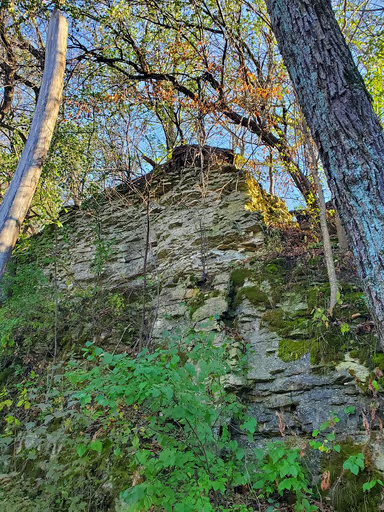
Tucked among the trees, the stone remains of Footville’s past tell stories of hard work, heritage, and small-town pride. Step off the path and you’ll find a piece of Wisconsin history waiting to be explored.
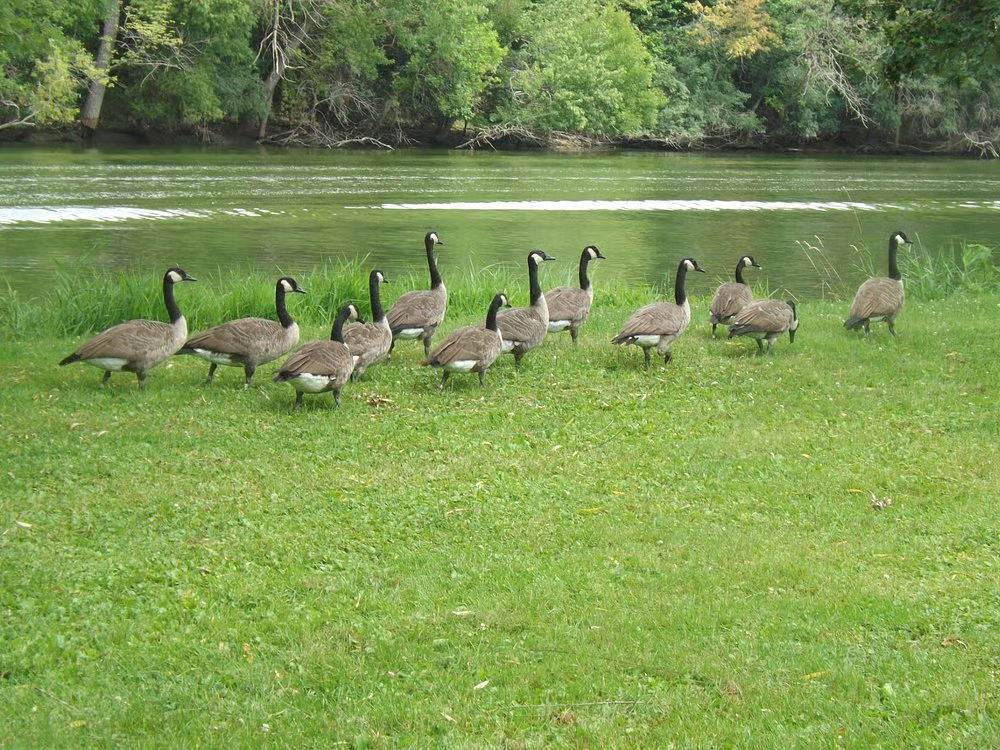
Wildlife thrives along the quiet riverbanks — a daily reminder of Footville’s calm, natural beauty. From geese on the water to the rustle of leaves, it’s the perfect place to pause and breathe.